

Stop managing every product like it’s SaaS
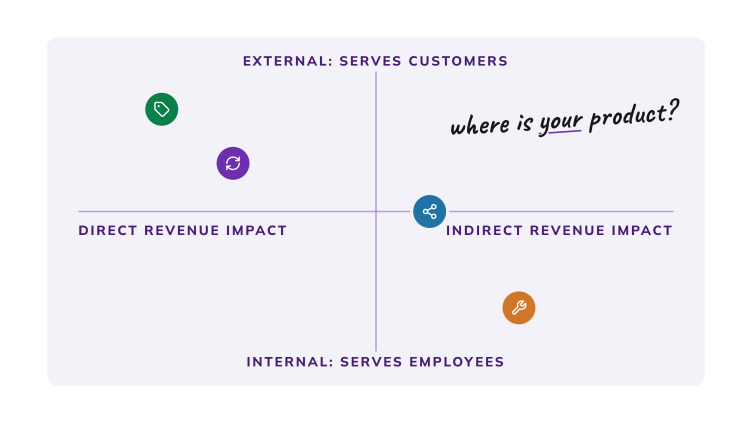
Let’s assume you’re a product leader and you’re doing everything right. Your team runs discovery, validates before building, and instruments every release. But what if your product KPIs are still stalling, and next year’s investment case is getting harder to make?
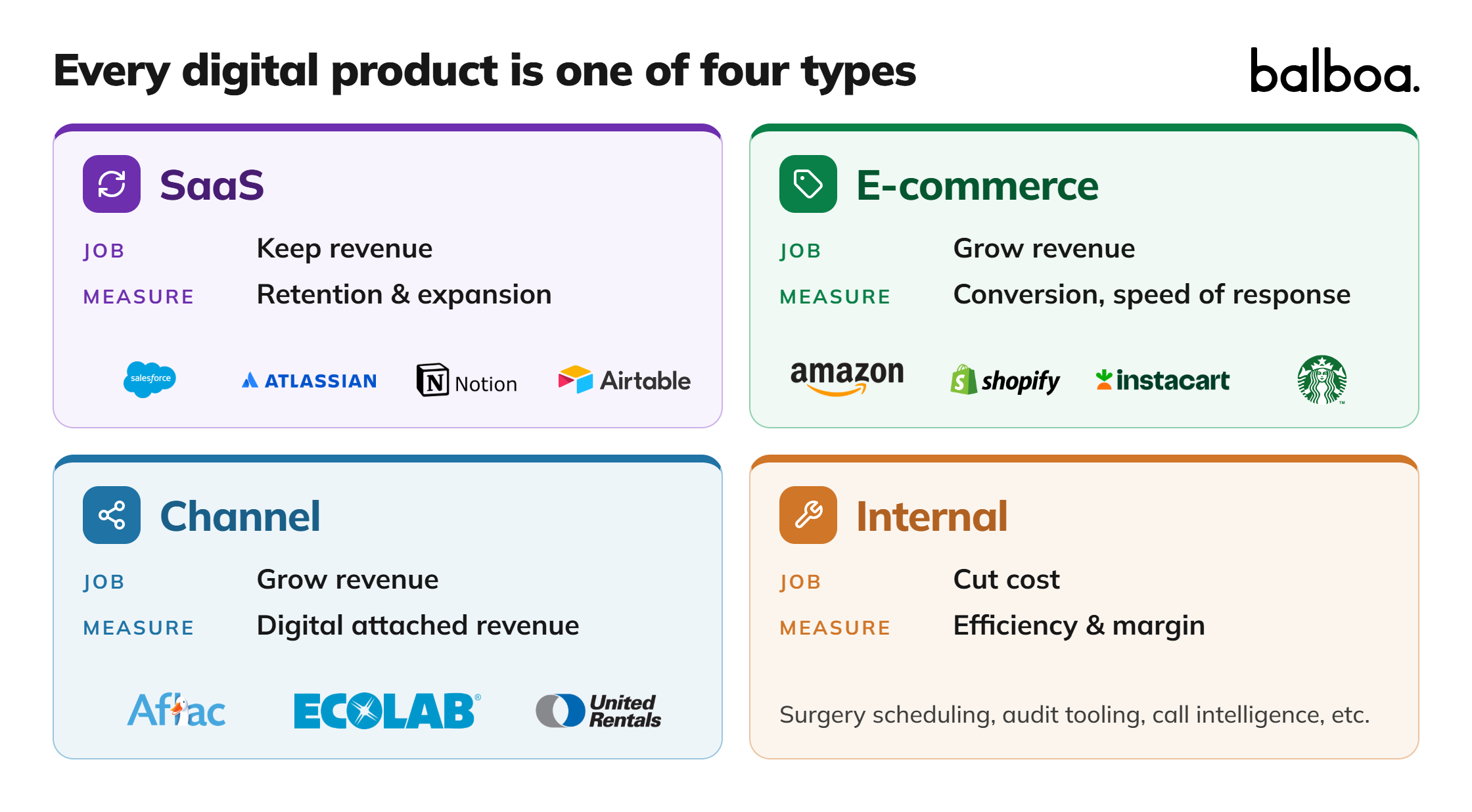
Most product advice comes from people who build SaaS, so SaaS habits become the “best practices” for all digital product. But it’s 2026, the digital economy has evolved, and product teams are now building at least four different kinds of products. Each of the four connects to the P&L differently, so why would you focus your investment or measure success for them the same way?
Welcome to Beyond The Click by Balboa. Today we’re walking through the four product types and what each one uniquely needs from you, including:
- SaaS products sell reliability 🔁
- E-commerce products sell an offer 🏷️
- Channel products sell everything else 🔗
- Internal tools buy hours back 🔧
- Know which one you’re really building 🎯
Let’s dive in.
SaaS products sell reliability 🔁
No customer sets out to buy software. They buy a job done reliably and continuously, which is why the relationship is the renewal and retention is the test of whether the product works. Well-known examples include Salesforce, Atlassian, and Notion, but agents sold by subscription are now part of this too.
The standard product playbook is tailored to this pillar, so if you’re building SaaS, keep running it. Measure retention and expansion, and anytime a customer churns, first ask yourself “could the product have done their job better?”
E-commerce products sell an offer 🏷️
On Amazon, Shopify, or even the Starbucks app, the product is really the offer, meaning price, availability, terms, and how quickly these things can respond when your competitors change theirs.
For example, one hotel operator we work with now gets a weekly competitive intelligence brief for their booking site on ~20 competitors’ offers, compiled by an agent. This was costly and impractical before AI, but now it means that speed of response is a number they can manage against.
Even with personal shopping agents bypassing the traditional storefront, the e-commerce fundamentals won’t ever change. So measure and manage your conversion rates and spend less energy polishing screens a shopping agent may never render.
Channel products sell everything else 🔗
Ecolab sells water-service contracts. United Rentals sells access to excavators. Aflac sells insurance policies. But each of these companies sells its product through a digital channel. The software (channel) itself has no value, but its purpose is to monetize something else.
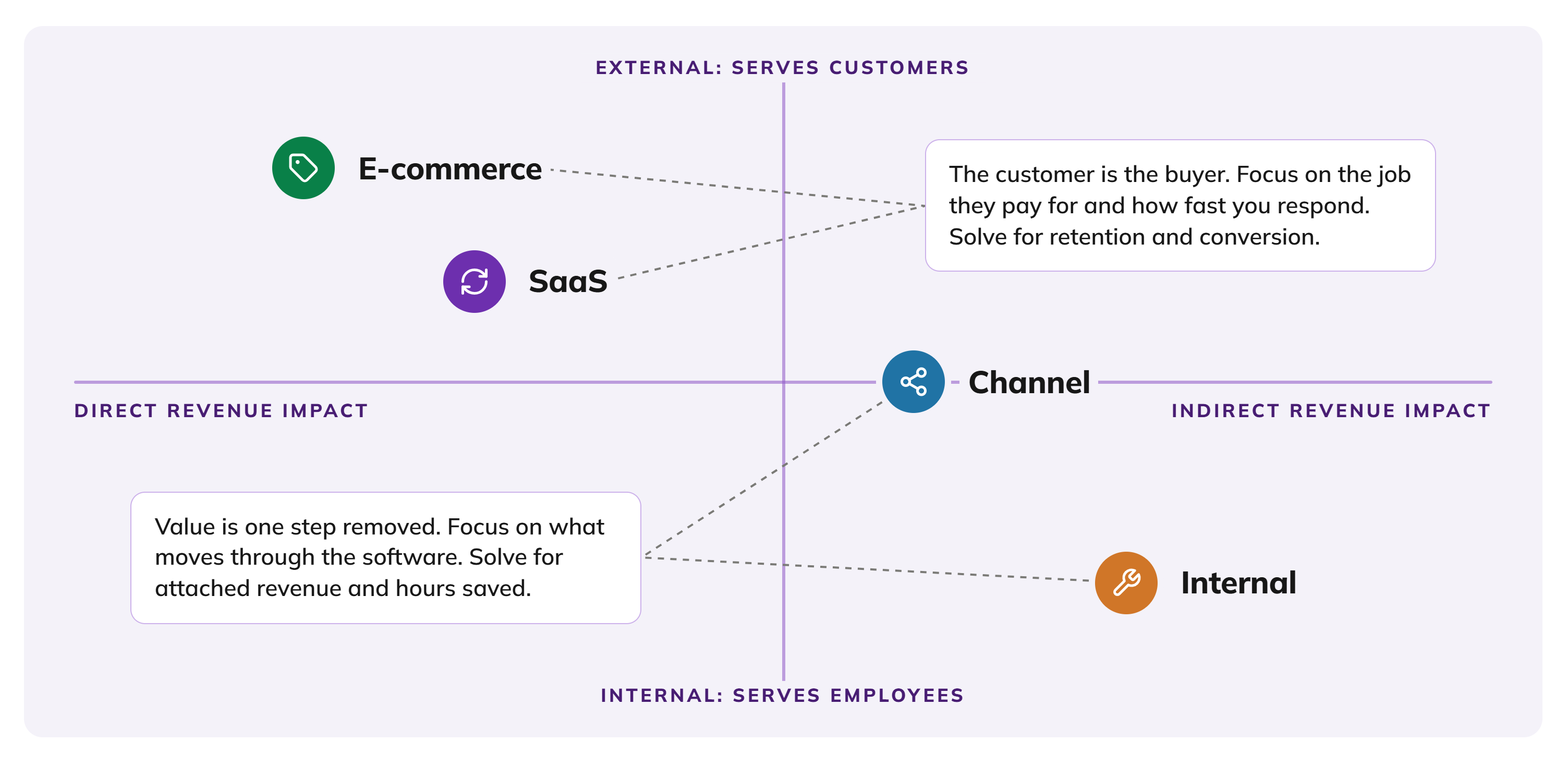
That one step of separation changes your job. Product discovery here centers on the channel’s needs more than on the buyer’s, and the key metric is attached revenue, aka the share of revenue flowing through your digital experience.
This pillar has become a huge piece of the digital economy. Companies nobody thinks of as “tech firms” now derive significant revenue from these products, and they have metrics to track it (e.g. >70% of total revenue is digital channel for United Rentals). Channel products are becoming the storefront, the sales rep, and the service desk all at once.
Internal products buy hours back 🔧
Surgery scheduling at a hospital system, audit tooling at a Big Four firm, and call intelligence agents at a consultancy all accomplish the same thing. The product is capacity, hours returned to the people delivering the work, and you measure it in efficiency and profit margin.
The customer never sees these internal products, unless efficiency becomes a part of the sales pitch (example: Big Four firms will demo their proprietary audit tooling to clients because more efficient service is a selling point). But a successful product in this category has a real impact on the P&L by reducing expense.
Know which one you’re really building 🎯
Every product in these four pillars does one of three jobs for the business: it grows revenue, it keeps revenue, or it cuts cost. And in all four, the software is really just a vehicle for value, whether that value comes as an enterprise workflow, a bargain deal, a latte, or an hour your team can invest in something else.
None of this discounts the best practices. Discovery, validation, and product analytics are the foundation for all four product pillars. But if you don’t tailor your approach to the business you’re in, your product won’t achieve its best results.
Measure your product the way its revenue works, make the investment case in those same terms, and the best practices that stalled out will start paying off.
Was this article helpful to you? Subscribe to Beyond The Click and get the latest on Product Success in your inbox every other Thursday.