

Balboa Turns Two
Balboa was just an idea two years ago. Today, we’re the number one solutions partner for the Pendo ecosystem.
In this edition I wanted to pause and reflect on things that I’ve learned through this whole journey, including:
- How to start a company
- Where the product org is headed
- What AI is (and isn’t) changing for all of us
Basically, this is the story of how we got here.
Let’s dive in.
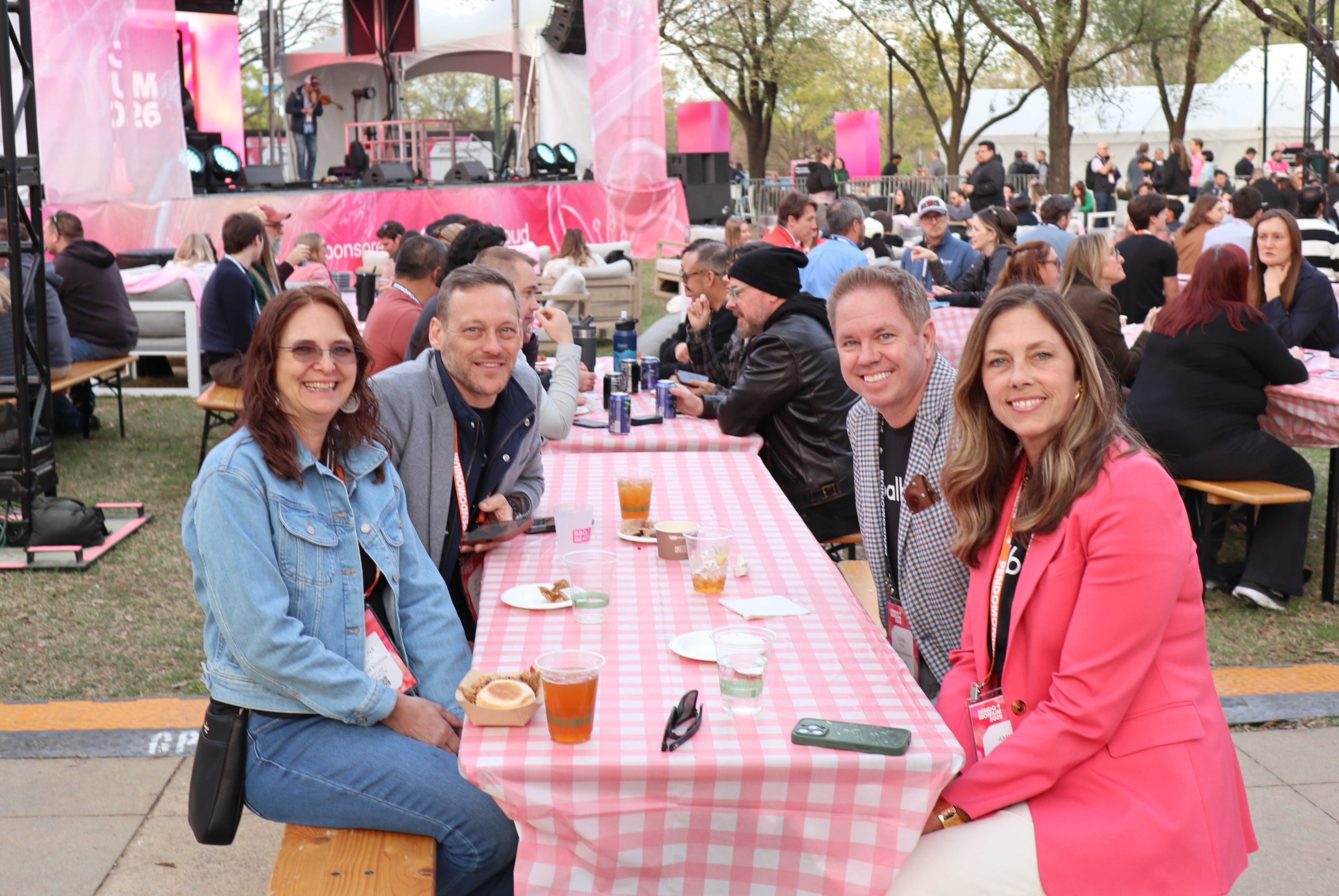
The hidden opportunity in a big market 💎
It was the summer of 2024 when the idea for Balboa first took shape. Digital product analytics was an energetic but still nascent industry. Pendo was a roughly $200 million ARR company then, growing fast and sporting a roster of name-brand enterprise logos.
Those enterprise customers were complex (as large companies always are) and needed more hands-on capacity to get the most out of their investment. Pendo was also going cross-functional, branching out from their core buyer, the product org, and into other teams that benefit from product analytics, e.g. customer success, UX research, and product marketing. Their mission was to become the system of record for product data, and they were taking the right steps. But, like most software companies at that stage, Pendo had almost no third-party solution partners.
And that gap was the opportunity that caught our attention.
Software companies staff their teams with top experts on their own product, but they rarely have room to staff experts in each customer’s industry, processes, or people dynamics. A service partner can cross that chasm by acting as an extension of the client’s team. Sure, this means walking a careful line between dedication and independence. Pendo is our partner and we’re as dedicated to their success as to ours, AND we must play the role of an objective advisor to win our clients’ trust and deliver the best outcome for them. But in 2024, almost nobody was doing that for Pendo customers.
The other interesting thing about Pendo was that it seemed to be on “the Salesforce trajectory.” This is sort of ancient history now, but before there was RevOps, Salesforce Admins, or the massive Salesforce partner industry that exists today, Salesforce was just a powerful, under-adopted tool that was usually a second job for someone on the revenue team. Pendo had a similar dynamic. We knew dozens of senior product managers who were also the de facto “Pendo person” for everyone else in their building. That two-job dynamic looked to us like the start of a huge services industry, driven by a bigger shift toward making product decisions based on usage data rather than just NPS scores or gut feel.
We didn’t reach these conclusions alone, of course. During 2024 we met with Pendo leaders across partnerships, services, sales, and customer success, and of course CEO Todd Olson. We also consulted friends from the ecosystem who were long-time customers and users of the platform. The common thread in all these conversations was that Pendo was going deep into enterprise, and to help achieve that they wanted great partners. And to prove it, they asked us to handle the onboarding for a few of their new customers, a vote of confidence I will always be grateful for.
So we came home from Raleigh and got to work. And our first dollar of revenue hit the bank account in the spring of 2025.
“Hey, this just might work” 💡
In early 2025 we had to figure out who we needed on our team. Technical expertise on the Pendo platform was, of course, table stakes. But the people we wanted most could also lead the client through the business discussion. Our first team members came from the business side and already knew what it was like to rely on Pendo to do their jobs. This became our model for anyone we hire who leads client engagements at the enterprise level.
Meanwhile, our early sales motion was all about solving the “chicken and egg” problem: you need a track record to work with enterprises, but working with enterprises is how you build your track record! So we did a little work pro bono, as an investment in both ourselves and the ecosystem. For example, we made the drive to spend a day with one of the biggest banks in the Southeast, who was also a longtime Pendo customer, and we offered as much help as we could for free. They bought us lunch, and we earned the right to add their logo to our track record.
But the pro bono approach didn’t last long, because I’ve always believed that price reflects value. If the price is zero, then clients sometimes don’t trust that your work is worth anything. So we priced our next round of projects at cost, and in this way our clients took a chance on Balboa, we delivered the best value we could for them, and we grew trust in our services, one logo at a time.
Meanwhile, our friends at Pendo were working on something that has become equally critical to the success of our partnership: the enterprise license agreement, or ELA. It’s a common thing in B2B SaaS, but at this point Pendo was just reaching the scale where it really works. Picture a company where a few teams have independently adopted your platform, and you want to take that adoption truly org-wide. You can try “pushing” that in a top-down motion, which is theoretically quicker but in practice very high-friction, or you can let internal success stories “pull” more teams onto the platform until an enterprise-level, all-you-can-eat contract just makes the most sense for the customer. As Pendo moved deeper into enterprise, they coached their sellers toward the “pull” motion, cultivating internal successes until they hit the critical mass for an ELA. But signing an ELA also brings a tidal wave of need for implementation, enablement, and governance across all the new teams and apps that are suddenly on Pendo. So Pendo needed an enterprise-ready solution partner who could support these ELAs after they closed.
It was months of preparation for both our teams, but it finally paid off in the summer of 2025. A massive industrial hygiene vendor had built enough momentum with Pendo internally that they decided to deploy it across their most important platforms through an ELA, and we’ve been helping them deploy it ever since. We created a programmatic approach to enterprise adoption, rolling out app by app, that layered on top of Pendo’s strength. I can’t overstate just how much of a watershed moment this engagement was for Balboa. It was a huge logo for us, an unmistakable proof point for the partnership, and the template for all our ELA support projects ever since.
Building the boat as we sailed it ⛵
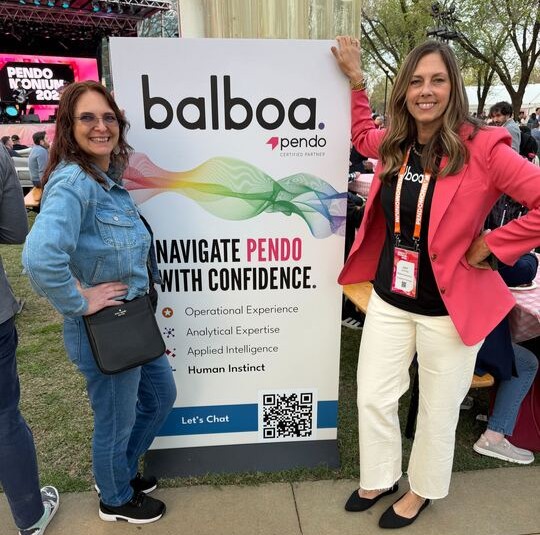
Building from that foundation, the back half of 2025 was a huge inflection point for Balboa. We accelerated our hiring (most of our 15+ member team joined us during this wave and after), and we surpassed 200 Pendo customers served. So how did we pull this off?
We had a lot of help from our friends and partners, and no small measure of luck. But we also helped ourselves a lot when we figured out how to succinctly communicate our services: we implement Pendo, we optimize and accelerate adoption of Pendo for new use cases, and we manage Pendo. Each of these three maps to a discrete, repeatable service offering, and has helped us move away from the confusion of custom scoping for each new project. Every conversation we’ve since had with Pendo sellers and prospective clients has been leaps and bounds easier.
We also helped ourselves a lot by putting a real process behind how we hire, enable, and support our consultants. This is the point where our top enterprise engagement manager became our Head of Client Delivery, which has been tremendously impactful to this.
This is also the point where we stepped on the gas with our content and community. We realized that the more the ecosystem wins, the more Balboa wins, and so our vision is to add value to every product company, client or not. So we expanded distribution of our newsletter, Beyond The Click, and started doing live roundtable events. The goal has always been to 1.) give a platform to innovating leaders, 2.) ask them what cool things they’re building today, and 3.) make space for our community to ask questions.
So we now had a process for serving and reaching our community, but we were still discovering who exactly that community was.
Finding our “secret” sauce 🧪
We’d known from the start that enterprises leave massive value on the table if product data doesn’t reach the customer-facing teams. But we weren’t equipped to solve this problem until early 2026, when we started to work more with Pendo’s customer health score modeling tool. Not only did this work help us build out our data engineering capabilities, it also helped us determine where we could have the most impact on our clients: the Product Success Lifecycle.
Most organizations we meet run product and customer success as separate functions and burn a lot of calories getting them to collaborate. We came to see them as two sides of the same coin, jointly running one continuous loop of deciding what to build, validating it, driving adoption, and improving it. Plenty of teams run pieces of that loop inside a single product. We realized it needed to run across the entire enterprise, through every application and team that touches the customer.
That idea has shaped how we serve clients ever since. Much of our work now brings customer success, sales, and product marketing alongside the product team. Pendo is at the center of everything we do, but a clean, well-instrumented Pendo instance with great dashboards is just the foundation of what our clients need. The rest is deciding what parts of the product to change, launch, and sunset, and we wanted to help our clients with all of it.
And, fortunately, the evolving tech landscape enabled us to do exactly that.

Going agentic 🧠
Agentic AI became undeniably more than science fiction in 2026. And when our team realized this, it overhauled how we serve product orgs, both strategically and operationally.
On the strategic side, SaaS applications are now just a specialized layer of inference compute, made accessible to agents through APIs and MCP servers. As these interfaces replace the UI as the main way people get value from software, product analytics has to evolve too. Human users spending lots of time in your app is no longer a strong indicator of value, and in fact may indicate the opposite. Real value is measured in completed outcomes, increasingly done by agent users. The winning product companies will be the ones who can lean into this transition, rather than running from it.
On the operational side, we’re starting to deploy agents into client orgs as members of their team, each one with a specific job, like an inbound product feedback agent or an agent that recruits the right customers to be alpha testers for new releases. There are many important, ongoing, but automatable tasks for product companies, and we’ve realized that we can help clients with these at a greater scale than ever before, either by giving them access to our agents or by building new agents in their own environment.
It’s such an exciting time to run a company like Balboa. Professional services firms have long grappled with the question of reach: how can our people’s expertise reach more clients when there’s only so many human hours in the day? We’re proud to help build the answer to this question in the agentic era.
Our product is our people 🙏
I’d be lying if I claimed to have known this is where Balboa would be when we started two years ago. In fact, it was quite the winding road to get here. We were founded on partnership. We got the wheels turning through trust. We became something of a real business via process. We differentiated ourselves through a niche. And today, we’re using agents to scale our reach. It’s been a wild ride, and I’m so grateful for all the people who have helped Balboa navigate it, including our partners, our clients, our advisors, and especially our employees. Without them, none of the Balboa story would have been possible.
The only thing I feel (almost) as strongly as gratitude is anticipation. Because as fun as these last two years have been, I’m even more excited for what we’ll accomplish in the next two.
Jay Nathan
CEO & Co-founder, Balboa
Jay’s Picks 📚
Hey there - I’m starting a new thing where each edition I’ll share a few pieces by other thought leaders in the industry that I found valuable. If you like our stuff, then you should check these guys out!
- How to tell if a startup has a moat (Dan Hockenmaier, Lenny’s) - it’s recently become more popular to talk about products as they relate to economic moats, and I’m here for it. Dan does a great job of explaining why products need a moat to survive in the AI era.
- The Only 2 Moats That Actually Work In The AI Era (SC Moatti, Products That Count) - a more contrarian take on the above. I like how SC points out that switching costs, the canonical “SaaS moat” for decades, are really under threat today.
- The Feature Factory: A 10-Year Retrospective (John Cutler, The Beautiful Mess) - John’s writing is always really thoughtful. I recently wrote about being a “feature factory” as sort of a bad thing, but he’s got a more nuanced take on when/where it can actually be useful.
Was this article helpful to you? Subscribe to Beyond The Click and get the latest on Product Success in your inbox every other Thursday.